
Yes, scalp micropigmentation can be safe when it is performed by a properly trained, licensed and experienced practitioner using hygienic tattooing practices. It still carries risks, including infection, allergic reaction, scarring and pigment migration. A consultation should assess your hair loss, scalp health, medical history and expectations before treatment.
What makes a scalp tattoo safe?
When I discuss a scalp tattoo for hair loss, I explain that it is a cosmetic tattoo, not a medical treatment. I use tiny pigment deposits to reduce the contrast between the scalp and the hair, creating the appearance of closely cropped follicles or greater visual density. It does not regrow hair, alter natural growth or treat the cause of alopecia.
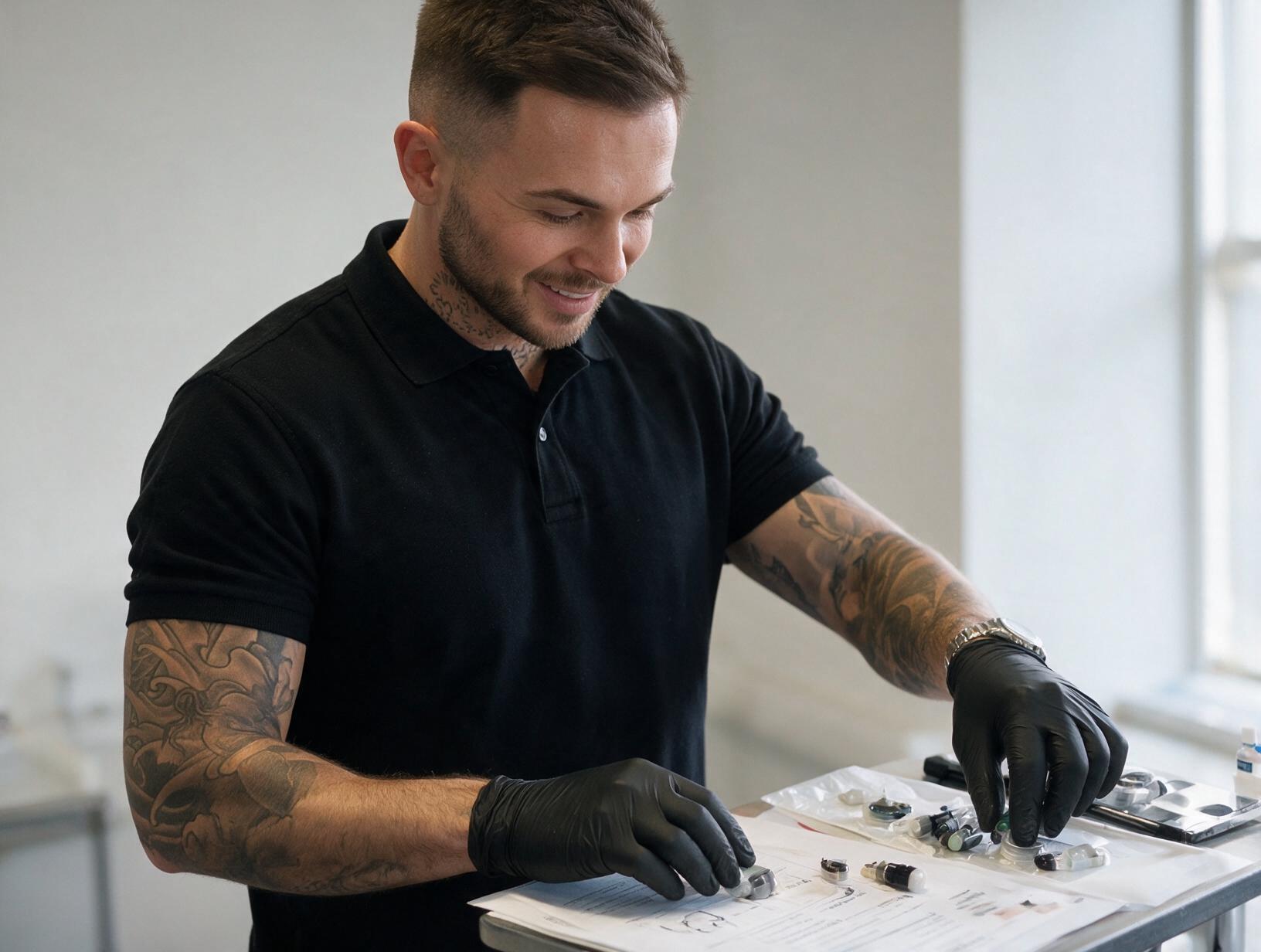
As with any tattooing procedure, safety depends on the practitioner, the equipment, the pigment and the condition of the skin being treated. I would expect an SMP practitioner to have dedicated SMP training, a body art practitioner licence and current bloodborne pathogens certification. A clean sterile studio, single-use packaged needles and appropriate barrier protection are also important.
Before booking, ask to see genuine examples of the practitioner’s work, ideally including healed results. Pay particular attention to hairlines. A hairline that is too straight, too dark or too low can make otherwise careful work look unnatural. Your provider should be able to explain the pigment and technique used, rather than asking you to make a decision without clear information.
At Scalp Studio, I provide SMP for concerns including shaved styles, male density, alopecia, scars, repair and hair tattoo work. I still assess each person individually because a service label does not determine whether treatment is appropriate for a particular scalp.
What are the risks of hair loss scalp tattooing?
The main risks are similar to those associated with other forms of tattooing. Infection can occur if hygiene standards are poor. Some people may react to pigment or develop inflammation. Excessive depth can cause pigment to spread, producing blurred dots or an unnatural grey, blue or green appearance as colour settles. Skin trauma can also create scarring, particularly in people who are prone to abnormal scars.
For that reason, I need to know about allergies, previous reactions to tattooing, medication, skin conditions and your medical history. Anyone with a history of keloid or spontaneous keloid scarring should speak with a dermatologist before considering SMP. Active eczema, psoriasis, scalp acne or another flare-up should be assessed and settled before treatment.
If you are concerned about a possible allergy, ask whether a small patch test can be considered before the full procedure. A patch test cannot remove every risk, but it is a sensible part of a careful discussion about pigment suitability.
If you have unexplained or recently changing hair loss, seek a proper diagnosis first. SMP can camouflage the visible effect, but it cannot diagnose, prevent or treat an underlying condition. In suspected female pattern hair loss, blood tests may be appropriate to rule out other diseases, metabolic conditions or hormone imbalances that can create a similar pattern.
There can also be issues later if poorly placed pigment needs correction or removal. Laser removal is possible, but complications during removal are more likely when the original pigment was implanted incorrectly. Good application is therefore important not only for the immediate appearance, but also for future options.
Who may be suitable for SMP?
SMP may suit people with male pattern baldness, thinning, alopecia, chemotherapy-related hair loss, transplant scarring or other scalp scars. It can be applied between existing hairs as well as across a fully shaved scalp. The most natural plan depends on how much hair remains, the pattern of loss, skin condition and how you intend to groom your hair.
People with advanced loss often choose a fully shaved look. Where hair remains, a short stubble length can help the pigment blend with natural follicles. I discuss whether a soft hairline or a fuller, straighter edge-up hairline is more appropriate. The choice should reflect your facial structure, age and preferred style, rather than copying a fixed template.
For clients considering alopecia or scar coverage, I have explained the considerations in my guide to SMP for alopecia and scar camouflage. Scarring skin can behave differently from non-scarred skin, so expectations and pigment retention need to be discussed honestly.
What happens before and during treatment?
Before an appointment, wash your hair and scalp. Avoid topical hair products, including medicated and non-medicated products, during the week beforehand unless your healthcare professional has told you otherwise. Avoid alcohol for the day before and after treatment, and arrive rested, hydrated and with clean skin.
At consultation, I assess the scalp and agree the treatment area and hairline with you. I match the pigment to the current follicle colour and explain that some scalp showing through is normal. SMP should not look like a dense painted cap. The finished effect comes from carefully placed microdots, varied spacing and a design that works with your natural features.
A full course commonly involves two to four sessions, although the exact plan varies. Each appointment may take one to five hours depending on the area and the amount of detail required. I normally begin more lightly, then assess how the pigment settles before adding depth and density at follow-up appointments. Healing time between sessions helps reduce the risk of over-saturation and migration.
Discomfort is usually limited, but sensitivity varies. Numbing medicine may be used where appropriate. I place pigment in the upper layers of the skin, controlling the depth carefully. Bleeding is not a target outcome, and visible bleeding can indicate that the application is too deep and needs to be adjusted.
How should you care for the scalp afterwards?
Aftercare is general good-practice information, not medical advice. Follow the specific instructions given after your appointment. In general, keep the scalp dry, avoid shampoo, shaving, heavy exercise, hot showers, steam rooms and sweating for the first four days. A shower cap can help when bathing.
From around days five to ten, gentle washing may resume as advised. Avoid direct sun while the skin settles. After the early healing period, use broad-spectrum SPF 30 to 50 on the scalp and moisturise as recommended. Swimming pools, saunas and steam rooms should be avoided for 28 days after the final treatment. Full healing can take approximately 30 days.
Colour often looks darker at first and then lightens as the scalp heals. Do not pick flakes or scabs, and do not judge the final result too early. If you notice fever, pus or drainage, severe pain, unusual warmth, spreading redness or significant swelling, contact a healthcare provider. For a concern that is less severe but outside what we discussed, contact your practitioner promptly.
If you are also weighing up comfort, my guide to whether a hair tattoo hurts covers what people commonly feel during treatment. You can also review scalp micropigmentation for hairline restoration when your main concern is a receding or uneven hairline.
If you are considering a scalp tattoo for hair loss, a consultation is the best place to discuss your scalp, goals and safety considerations without pressure.
Frequently asked questions
Does SMP damage existing hair follicles?
SMP is intended to place pigment in the upper skin layers and does not cut, transplant or chemically alter the hair follicles. It creates a visual effect only. However, poor technique can injure skin, so the practitioner's training, depth control and experience remain important when you are choosing who will perform it.
Can scalp micropigmentation cause an allergic reaction?
Yes, it can happen, although reactions are not expected for most clients. Tell your practitioner about allergies and previous tattoo reactions before treatment. Ask about the pigment being used and whether a small patch test is appropriate. Seek professional advice promptly if you develop worsening swelling, rash or other unexpected symptoms.
Is SMP suitable for a scarred scalp?
It can be suitable for some stable, fully healed scars, including certain transplant or surgical scars. Scar tissue may retain pigment differently from unaffected skin, so the result can be less predictable and may need a tailored plan. Active, changing or irritated scars should be assessed before booking.
Can SMP hide alopecia permanently?
SMP can camouflage visible scalp and may help create the appearance of a fuller or closely shaved head. It does not stop alopecia or make hair grow. If the pattern of hair loss changes, the design may need adjusting later. A consultation should cover both the current appearance and possible change.
Will scalp micropigmentation look like real hair?
Well-planned SMP is intended to resemble the shadow of short follicles, not individual strands of long hair. The result should include some natural scalp visibility and a hairline suited to your face. Pigment colour, dot size, spacing, skin type and grooming all affect how convincing the finished appearance is.
Can an MRI affect a scalp tattoo?
Some tattoo pigments may contain metallic components, and people have occasionally reported warmth, swelling or discomfort during MRI scans. Tell the MRI team that you have cosmetic tattoo pigment before a scan. Do not assume every pigment behaves identically, as the composition used for your treatment matters.
How long does a hair tattoo remain visible?
SMP gradually fades rather than washing away with shampoo. Longevity varies with skin, sun exposure, lifestyle, pigment and the nature of the hair loss. Results can remain visible for several years before a touch-up is considered, and this varies from person to person. Regular sun protection can help reduce avoidable fading, but it cannot stop natural ageing of the pigment.