
What does each treatment actually do?
A hair transplant and scalp micropigmentation solve different parts of the same problem. During a transplant, a surgeon moves living follicles from a donor area into areas affected by thinning or baldness. If the grafts establish successfully, they can produce natural hair growth.
SMP is a cosmetic tattoo treatment. I place tiny pigment dots in the scalp to mimic the visual impression of follicles or short stubble. It does not grow hair, alter the transplanted follicles or treat the cause of hair loss. Its job is to reduce the visible contrast between your scalp and hair.
That distinction is important. Combining the treatments does not create a fully painted, dense scalp. Some scalp showing through the hair is normal, particularly when the hair is longer or the thinning is advanced.
For a closer look at the choice between the two approaches, read my guide to whether SMP or a hair transplant is right for your hair loss.
Why might someone add SMP after a transplant?
Even a well-planned transplant has limits. The donor supply is finite, and the transplanted hair may not create the density someone imagined. Hair loss can also continue in the native hair around the grafts. SMP can soften the difference between areas with hair and areas where more scalp remains visible.
It can also help with scarring. Follicular unit extraction may leave small marks in the donor area, while strip surgery can leave a linear scar. SMP may camouflage those areas when the skin is suitable and fully settled. I also offer scalp micropigmentation for alopecia and scar camouflage, and a transplant scar needs its own assessment.
Some men use SMP between existing and transplanted hairs rather than shaving. This is the density approach. It can reduce scalp show-through while allowing you to keep hair, but the result depends on the pattern of loss, hair colour, hairstyle and the amount of remaining density.
When is it safe to have SMP after a hair transplant?
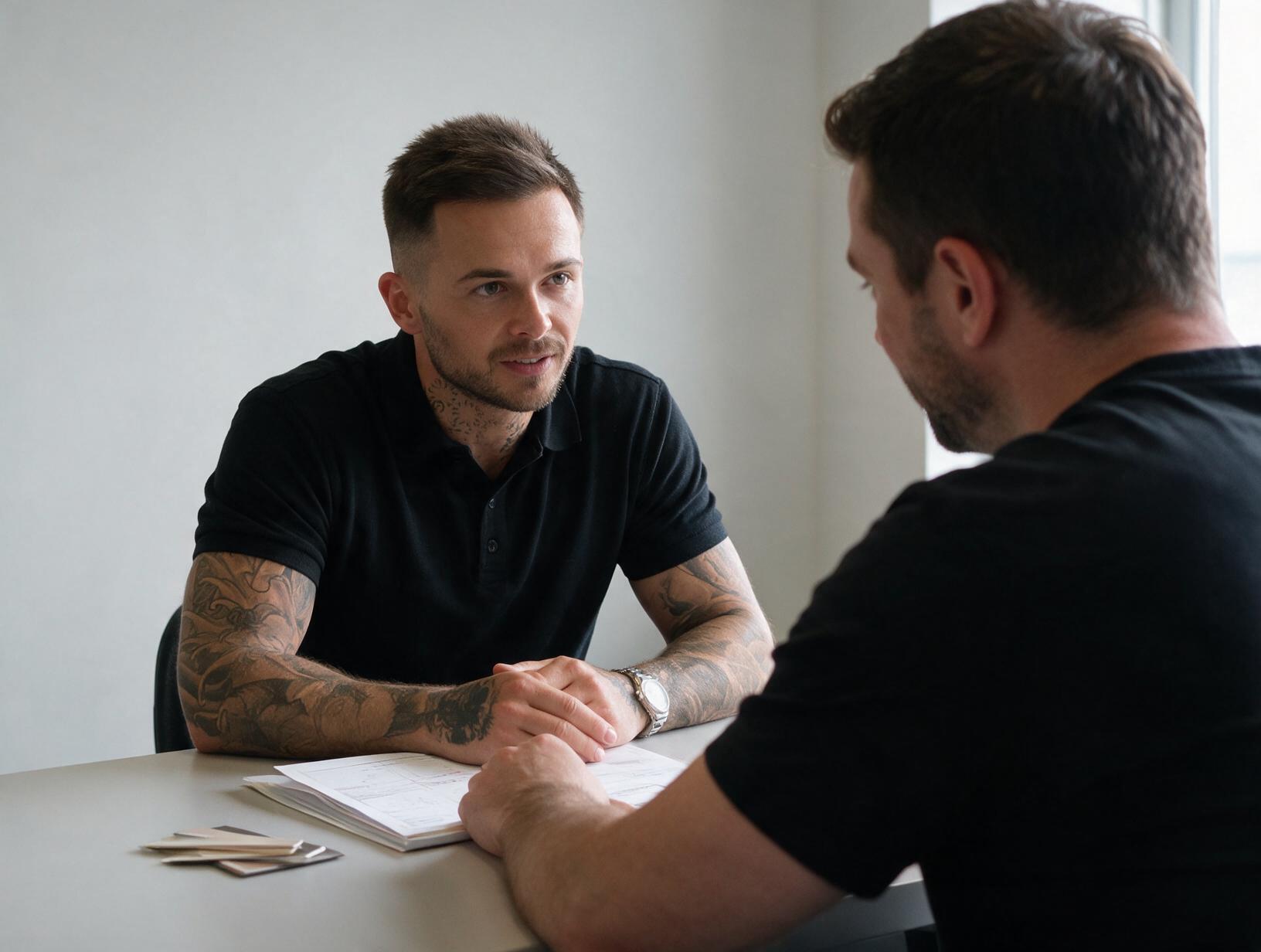
There is no responsible single date that suits everyone. Your scalp needs to be healed, stable and free from ongoing tenderness, open areas, significant flaking or other concerns. The transplant surgeon should confirm that the grafts and donor area are ready, and I need to assess the skin myself before agreeing to treatment.
That coordination matters because SMP involves placing pigment into the scalp. Applying it too early could interfere with an unsettled area or make it harder to judge the final transplant result. The agreed timing may also differ between the recipient area and a donor scar.
At consultation, I would want to understand the surgery you had, the areas treated, your current hair growth, any medication or complications, and the style you want to maintain. Bring your surgeon’s aftercare or clearance advice if you have it. If your scalp has active acne, eczema, psoriasis or another irritation, treatment should wait until the skin is suitable.
How do I plan the hairline and density?
I pay particular attention to hairline work because it is the part people notice first. A hairline that is too straight, too low, too dark or too uniform can look unnatural, especially as your facial features and remaining hair change over time.
For a shaved appearance, I would usually plan a soft, age-appropriate hairline that blends gradually into the sides and existing hair. A sharper edge-up can suit some men who want a fuller, straighter barbered finish, but it needs to match the hairstyle and the surrounding hair.
For density SMP, the pigment must sit between the hairs rather than form an obvious block of colour. I match the pigment to your current follicle or hair colour and build the appearance gradually. The aim is reduced contrast, not the impression that every visible part of the scalp has been filled in.
Your result may also need revisiting if the native hair continues to thin or if you change from wearing hair longer to keeping it very short. Planning for future hair loss is part of making the combination look coherent.
What should I expect from the sessions and aftercare?
SMP is normally built in stages rather than completed by forcing maximum darkness into one appointment. A lighter first layer allows the colour, spacing and healed appearance to be assessed before further detail is added. The number and length of sessions varies with the size of the area, the transplant scarring, your skin and the density you want.
Before each session, wash your scalp and arrive with clean skin. We discuss the treatment area, hairline and colour before work begins. Afterwards, follow the specific advice I give you. As general guidance:
- Keep the treated scalp dry and avoid washing, wetting or excessive sweating for the first four days.
- Avoid heavy exercise, hot showers, saunas, steam rooms and other hot environments for the advised period.
- Do not expose the scalp to direct sun during the early healing stage.
- Do not pick flakes or scabs. Lightening during healing is normal.
- After healing, protect the scalp with broad-spectrum SPF and moisturise as appropriate.
Following the final treatment, swimming, saunas and steam rooms should be avoided for 28 days, and heavy exercise for five days. Healing varies from person to person. Pigment gradually fades over time, and a review or touch-up may eventually be appropriate.
How do I choose the right practitioner?
Look at healed work, not only freshly completed photographs. Ask specifically to see hairlines, density work and scalp scars similar to yours. A practitioner should be able to explain pigment choice, placement, hygiene and what happens if the result later needs adjustment or laser removal.
Before booking, ask about SMP-specific training, licensing and hygiene standards, and check the studio is clean and sterile. Needles should be packaged and opened in front of you, with gloves, barrier protection and appropriate device guards used.
Disclose allergies, medication, skin conditions and any history of keloid or spontaneous keloid scarring. People prone to keloids may not be suitable for scalp tattooing, and anyone with active eczema or psoriasis should discuss the risk with a dermatologist first. You can also read my guide to the safety considerations for scalp micropigmentation.
I work from Glasgow, Scotland, and assess the transplant history, scalp condition and desired hairstyle before recommending a shaved or density approach. If you would like to talk it through, you are welcome to book a consultation.
Frequently asked questions
Can SMP damage transplanted hair follicles?
SMP is intended to place pigment in the upper layers of the scalp and does not change hair growth. However, treatment should only be considered once the transplant area has healed and the surgical team is satisfied with recovery. The SMP practitioner must assess the skin before proceeding, particularly if there were complications.
Can SMP hide a FUT or strip scar?
It may camouflage the visual contrast of a settled linear donor scar, although the skin texture and scar colour still affect the result. Scar tissue can hold pigment differently from ordinary scalp skin, so an assessment is essential. The scar must be fully healed, stable and free from active irritation before treatment.
Will SMP make my transplanted hair look completely full?
No. SMP creates the appearance of reduced scalp contrast, but it cannot add living follicles or make a limited donor supply larger. Some scalp visibility can remain, especially with longer hair or advanced loss. A careful plan should describe visual blending and realistic density rather than promise a fully covered scalp.
Should I shave my hair before combining the treatments?
Not necessarily. Men who prefer to keep hair can be assessed for density SMP between existing and transplanted hairs. A shaved or closely cropped style may be more suitable when hair loss is advanced or donor density is limited. The best option depends on your hair pattern, hairstyle, colour and comfort with grooming.
Can SMP be used if my hair continues to thin after a transplant?
It can sometimes reduce the contrast caused by ongoing thinning, but future hair loss needs to be considered before treatment. If surrounding native hairs recede, the original hairline and density plan may no longer suit you. I would assess the current pattern and discuss how a result could be maintained as it changes.
Does SMP after a transplant require different aftercare?
The basic scalp aftercare is similar, but the timing is different because the transplant must already be settled. Keep the area dry as instructed, avoid sweating, heat and sun during early healing, and do not pick flakes. Follow the surgical team's advice first if it conflicts with general SMP guidance.